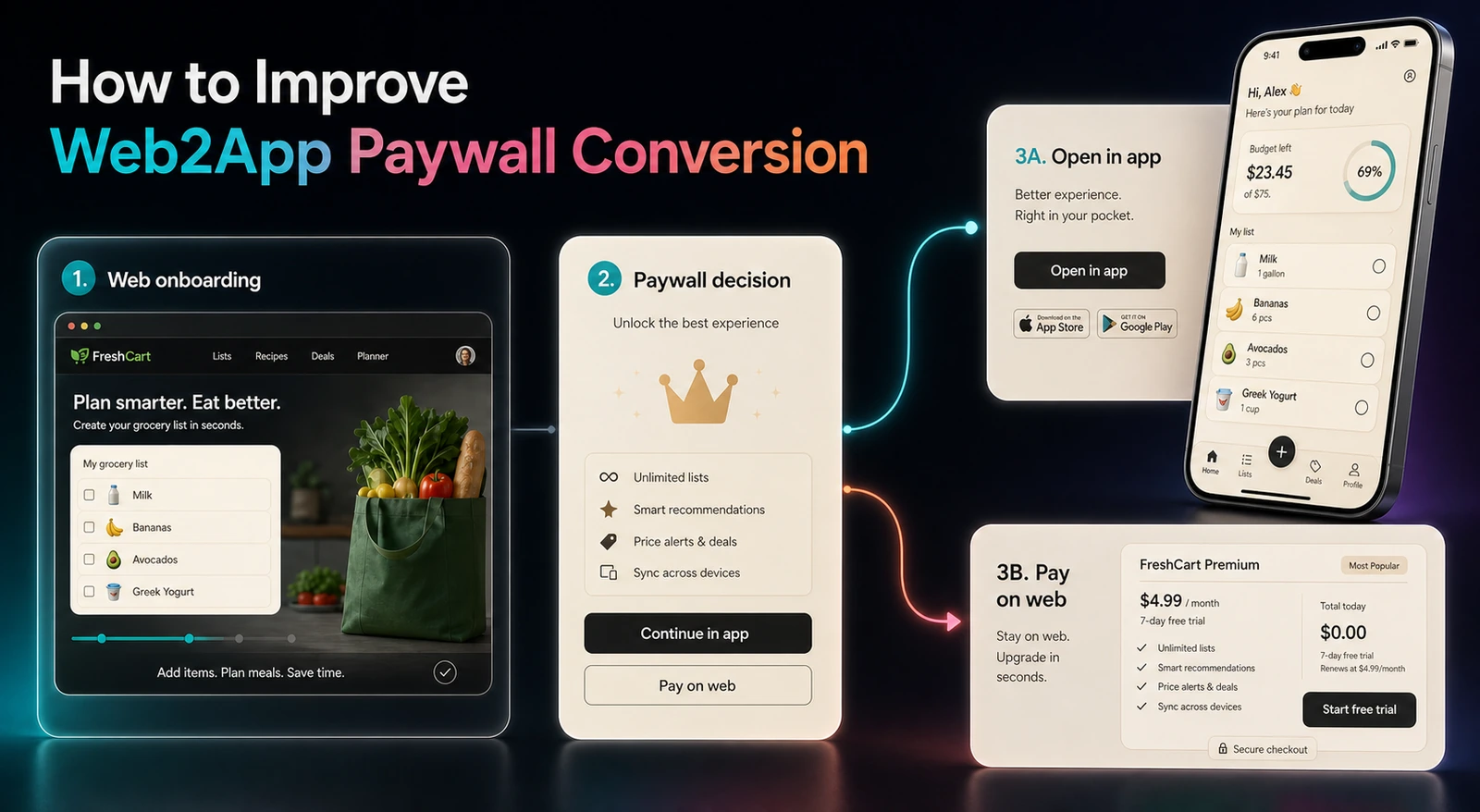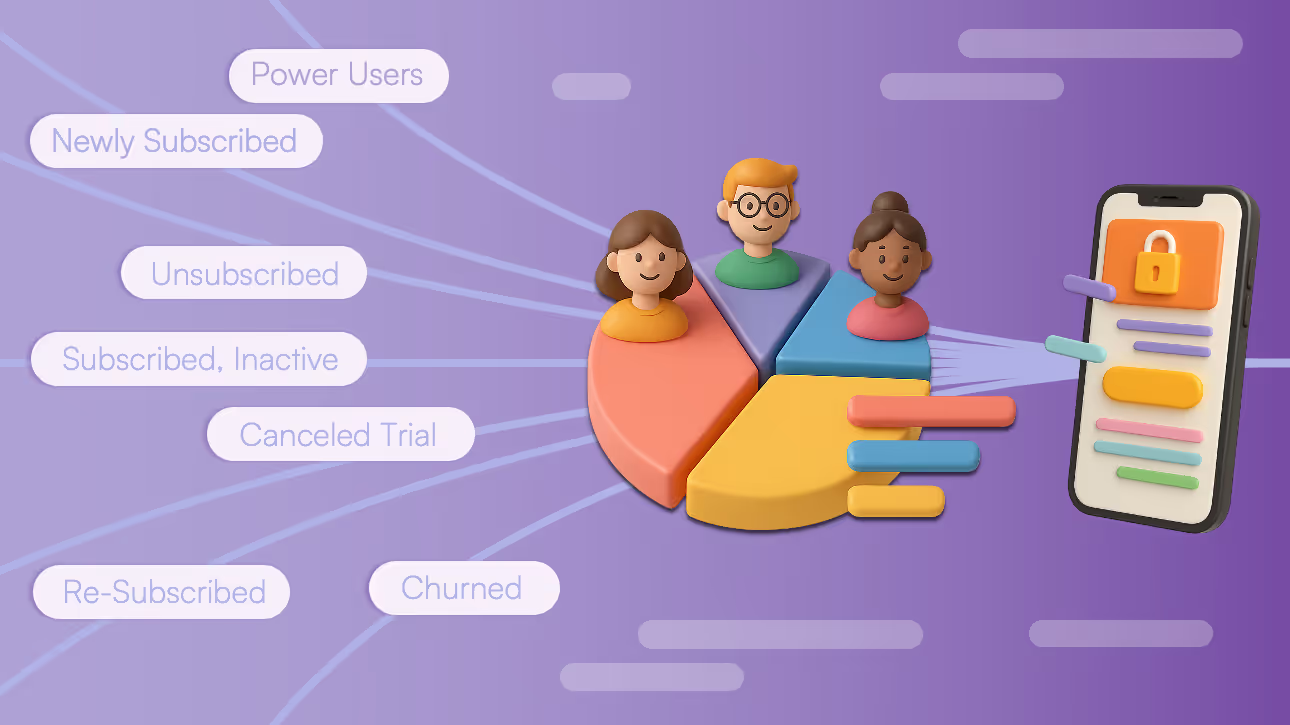
User segmentation is one of the most powerful levers for growth. By breaking your user base into meaningful groups and optimizing for each group differently, you can dramatically improve your metrics across the funnel.
Optimizing Paid UA with Segmentation
Your paid user acquisition campaigns should be segmented by the users you're trying to acquire. Different audiences need different creative, different messaging, and different targeting.
For example, a fitness app might segment:
- Beginners: Show creative about ease-of-use and beginner-friendly workouts
- Athletes: Show creative about advanced training and performance optimization
- Social/community users: Show creative about group challenges and community features
By running separate campaigns for each segment with tailored messaging, you'll see better conversion rates and lower CPA.

Optimizing Monetization with Segmentation
Segmentation is equally powerful on the monetization side. Different user segments have different willingness-to-pay and different LTV potential.
Behavioral Segmentation
Segment users by their in-app behavior: feature usage, session frequency, engagement depth. Highly engaged users have higher LTV and should see different (often higher-priced) offers than low-engagement users.
Zero-Party Data Segmentation
Ask users explicit questions during onboarding: "What's your primary goal?" "Are you a beginner or advanced user?" "Do you prefer solo or social experiences?"
This zero-party data is powerful for monetization. Users who selected "get fit" can see fitness-focused benefits on the paywall. Users who selected "social community" can see community features emphasized.
Understanding Your User Base

The first step in segmentation is understanding the diversity of your user base. Are all your users the same, or do you have distinct groups?
Key Metrics to Calculate
- Conversion rate by segment: Which segments convert at the highest rates?
- ARPU by segment: Which segments generate the most revenue?
- Churn rate by segment: Which segments stay longest?
- CAC by segment: Which segments are cheapest to acquire?
- LTV by segment: Which segments are most valuable long-term?
Demographic Segmentation
Break users down by age, gender, location, or other demographics. You might find that your app appeals to a narrower demographic than you thought, or that certain demographics have much higher LTV.
Platform Segmentation
iOS and Android users behave differently. iOS users often have higher LTV but lower volume. Android users are more price-sensitive. Segment and optimize for each platform's unique characteristics.
Attribution/Acquisition Segmentation
Users from different sources (organic search, social ads, referral, App Store) have different behaviors and LTV. Users from paid ads might convert faster but churn sooner. Organic users might take longer to convert but have higher lifetime value.
Behavioral Segmentation
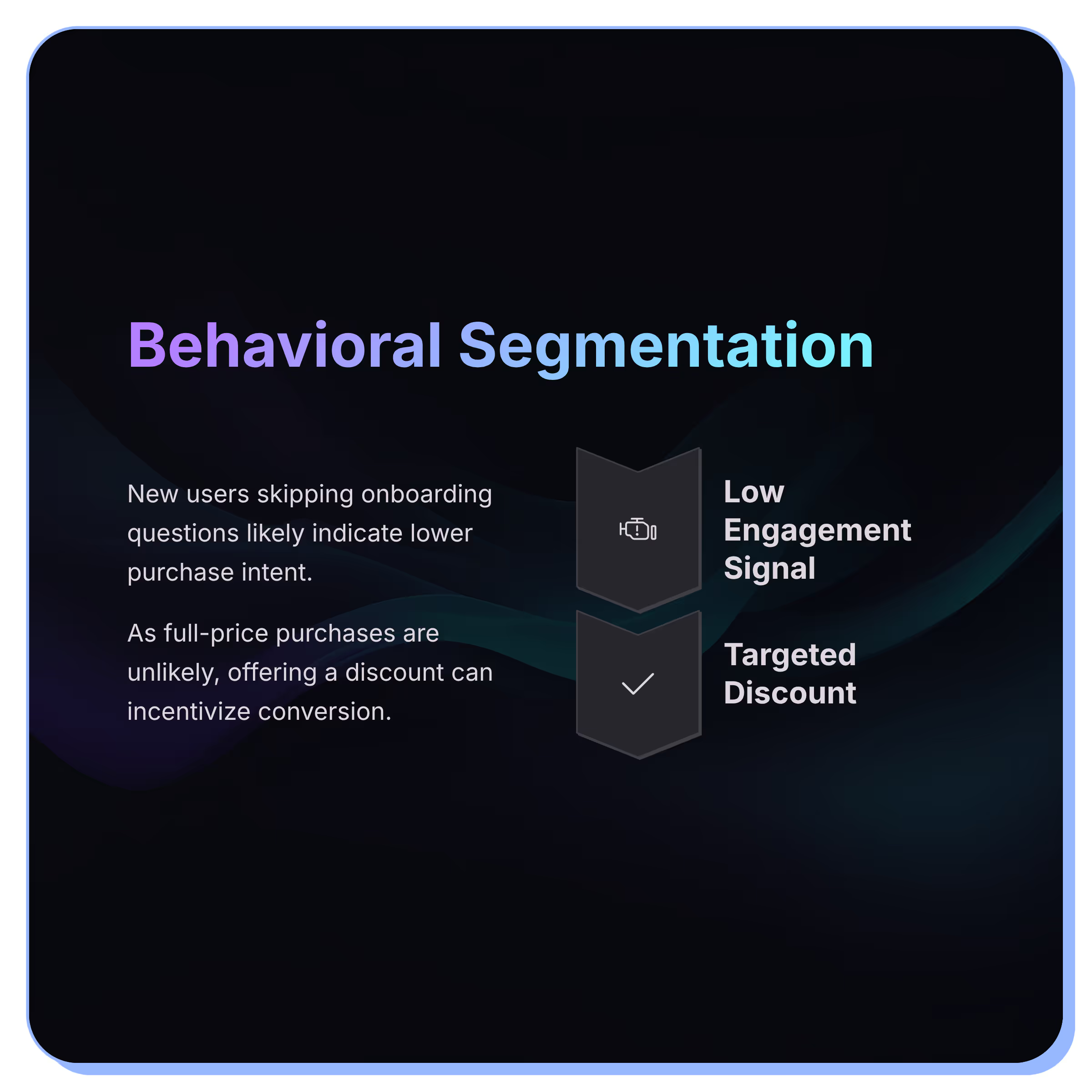
Go deeper than just "engaged vs. not engaged." Look at feature usage patterns. Do some users primarily use Feature A while others use Feature B? Different feature preferences might indicate different user motivations and different willingness-to-pay.
Product Prioritization Based on Segments
Understanding your segments can inform product priorities. If 60% of your users are beginners but only 20% use advanced features, you should prioritize beginner experience and beginner features.
Conversely, if your small "power user" segment drives 40% of revenue, you should invest in advanced features even if they're used by a small percentage of users.
Retention Analysis by Segment
Different segments have different churn patterns. Analyzing retention by segment helps you understand which users are most at-risk and which are most engaged.
Platform Segmentation for Retention
iOS and Android users often have different churn patterns. Maybe iOS users have higher 30-day retention. This might suggest that Android needs more engagement work, or different onboarding, or different pricing.
Cohort Analysis
Cohort analysis breaks users into groups by acquisition date, then tracks their behavior over time. This helps you understand if your product or monetization strategy is improving over time, or if changes you made are helping or hurting retention.
Example: Compare cohort behavior for users acquired in January vs. March. If March cohort has better 30-day retention, something positive changed in your product or onboarding between January and March.
A/B Test Segmentation
Not all A/B tests perform equally across all segments. A design change might improve conversion for iOS but hurt conversion for Android. A price increase might work for power users but not casual users.
When analyzing A/B test results, always segment the results by key dimensions (platform, demographic, engagement level). This reveals whether a "winning" test is actually winning for all users or just for certain segments.
Lifecycle Marketing and Segments
Different segments need different messaging at different lifecycle stages.
- New users (Day 1-3): Emphasize onboarding and first value delivery. Different segments might need different onboarding paths.
- Emerging users (Day 4-14): Encourage habit formation and deeper feature exploration. Push notifications might be highly effective for this segment.
- Active users (Day 15-30): First monetization moment. Segment-specific paywall messaging is critical here.
- Mature users (Day 30+): Churn prevention and upsell. Win-back campaigns for lapsed users; exclusive offers for super-users.
A one-size-fits-all lifecycle messaging strategy misses these nuances. Segment-specific messaging at each lifecycle stage dramatically improves outcomes.
Product Personalization vs. Segmentation
It's important to distinguish between true personalization and segmentation.
Segmentation
Grouping users into 3-5 defined segments and optimizing for each group. Example: "Beginners see beginner onboarding. Advanced users see power-user onboarding."
True Personalization
Tailoring the experience to each individual user based on their unique behavior and preferences. Example: "Show Feature A to users who searched for Feature A. Show Feature B to users interested in Feature B."
True personalization is more powerful but also more complex. For most apps, segmentation (grouping users into 3-5 buckets and optimizing for each) is more practical and still delivers significant results.
Avoiding Faux Personalization
A common mistake: calling something "personalization" when it's just segmentation. Or worse, creating so many segments that you lose statistical power and can't measure impact.
Stick with 3-5 meaningful segments. Measure impact on key metrics for each segment. Iterate and refine based on data. This is the practical approach to segmentation-based optimization.
Segmentation Across the Funnel
The power of segmentation comes from applying it across the entire user funnel:
- Acquisition: Segment your paid ads by target audience and messaging
- Onboarding: Different onboarding paths for different segment types
- Activation: Push different features to different segments based on their goals
- Monetization: Segment-specific paywall messaging and pricing
- Retention: Lifecycle messaging tailored to segment behaviors
- Expansion: Upsell and win-back campaigns targeting high-value segments
Measuring Segmentation Impact
To measure whether segmentation is working:
- Calculate baseline metrics by segment (conversion, retention, LTV)
- Implement segment-specific optimizations
- Remeasure after 4-8 weeks
- Compare improvements by segment
- Calculate overall impact (blended improvements across all segments)
Further Reading
Don't know your activation metric? Start with a few key early product actions. You can also check out https://www.retention.blog/p/deep-dive-into-activation-and-retention
Understanding what leads to better retention can also be useful optimizing paid UA. Read more on that here >
Here is an article I wrote a while ago about the segments to start with for your push notifications: 2024 Push Notification Quick Start Guide
Conclusion
User segmentation is one of the highest-ROI growth tactics available. By understanding your user base, identifying key segments, and optimizing acquisition, onboarding, monetization, and retention for each segment, you can dramatically improve your metrics.
Start with 3-5 meaningful segments based on behavior, demographics, or acquisition source. Measure baseline metrics for each. Implement segment-specific optimizations. Measure impact. Iterate and refine based on data.
Even small improvements in each segment compound into significant overall growth. Segmentation is fundamental to modern app growth strategy.