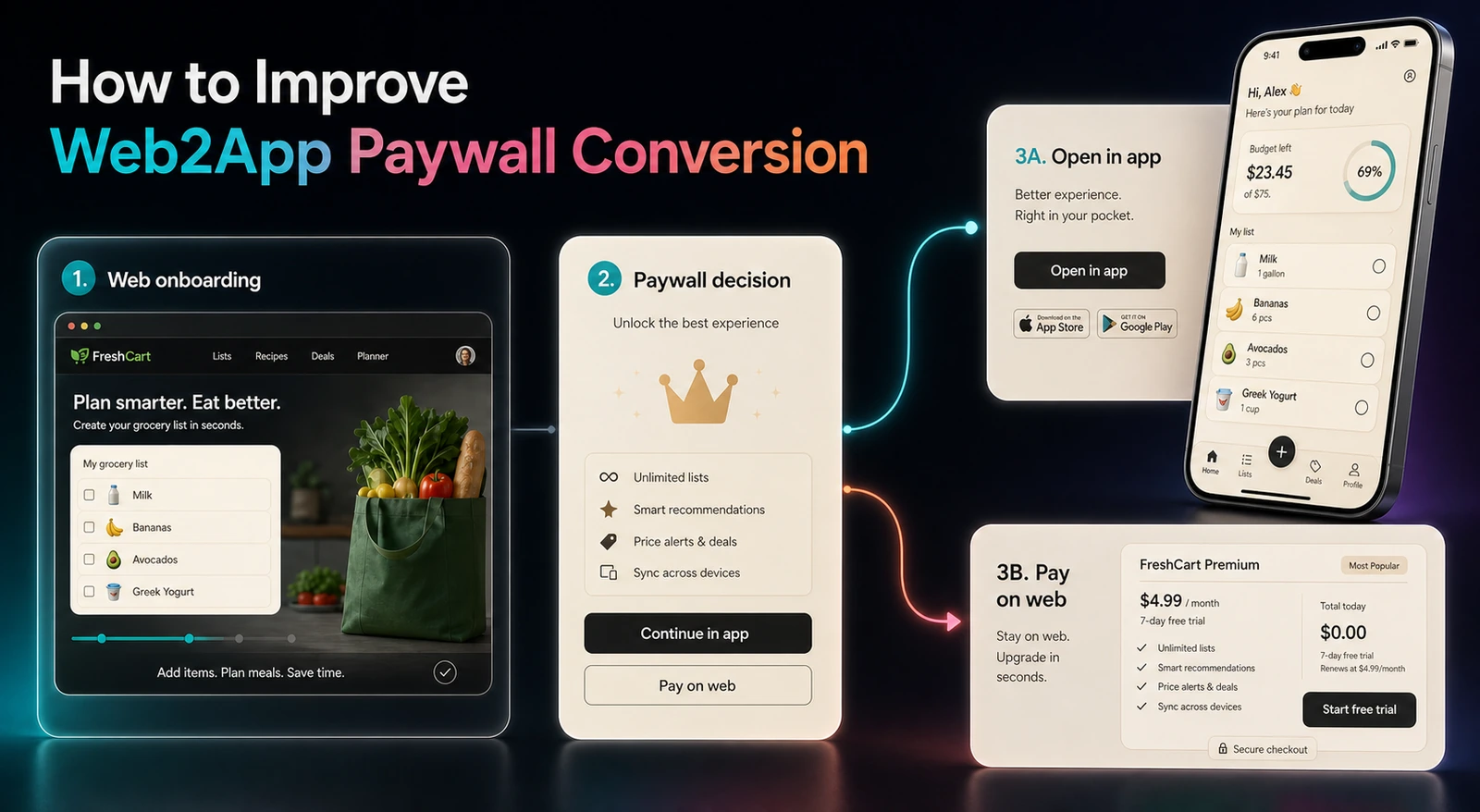
How to Personalize Paywall Messaging for Different User Segments
Subscription apps rely on paywalls to convert free users into paying customers. It's one of the most revenue-critical touchpoints in your app. But here's the problem: every paywall you show is trying to be everything to everyone.
One user might value privacy above all else. Another prioritizes premium features. A third is looking for the best deal. Yet they're all seeing the same paywall messaging, the same pricing tiers, the same value propositions.
This is why personalized paywall messaging matters. The paywall that convinces one segment may completely miss the mark for another. By tailoring your messaging to different user segments, you can increase conversion rates, boost your average revenue per user (ARPU), and ultimately improve your lifetime value (LTV).
This guide breaks down how to personalize paywall messaging based on user segments—from identifying your key segments, to researching what they actually value, to implementing and testing segment-specific paywalls.
Why Generic Paywalls Underperform
A generic paywall tries to communicate every benefit of your subscription. It lists features, highlights security, mentions customer reviews, shows pricing tiers, and adds a call-to-action. The result? Information overload.
When a user sees too many value propositions at once, they can't focus on what matters most to them. The message becomes diluted. And if your paywall messaging doesn't align with what a user actually values, they're unlikely to convert.
Different user segments have different priorities. Some are driven by outcomes ("Will this help me achieve my goal?"). Others are driven by social proof ("Do people like me use this?"). Still others are driven by pricing and value for money.
When your paywall messaging misses these priorities, you leave revenue on the table.
How to Identify Your Key User Segments
The first step is identifying which segments matter most to your business. You don't need to personalize for every possible user variation—start with 2-5 key segments that represent the majority of your user base.
Here are the signals to consider when segmenting:
- Onboarding data: What goals or preferences did users select during onboarding?
- Behavioral signals: How are users actually using your app? (feature usage, session frequency, engagement depth)
- Acquisition source: Did they come from organic search, social ads, or word-of-mouth?
- Demographics: What's their location, age, or platform?
Choose 2-3 of these that are most relevant to your business. For example, a fitness app might segment by: (1) Goal-oriented users (fitness enthusiasts), (2) Casual users (looking to get healthier), and (3) Social users (motivated by community).
Researching What Each Segment Actually Values
Once you've identified your segments, you need to understand what each one values. Traditional surveys can work, but they often suffer from bias and low response rates.
A more effective approach is MaxDiff analysis, a survey methodology that asks users to choose which features or benefits matter most to them when presented with a series of options.
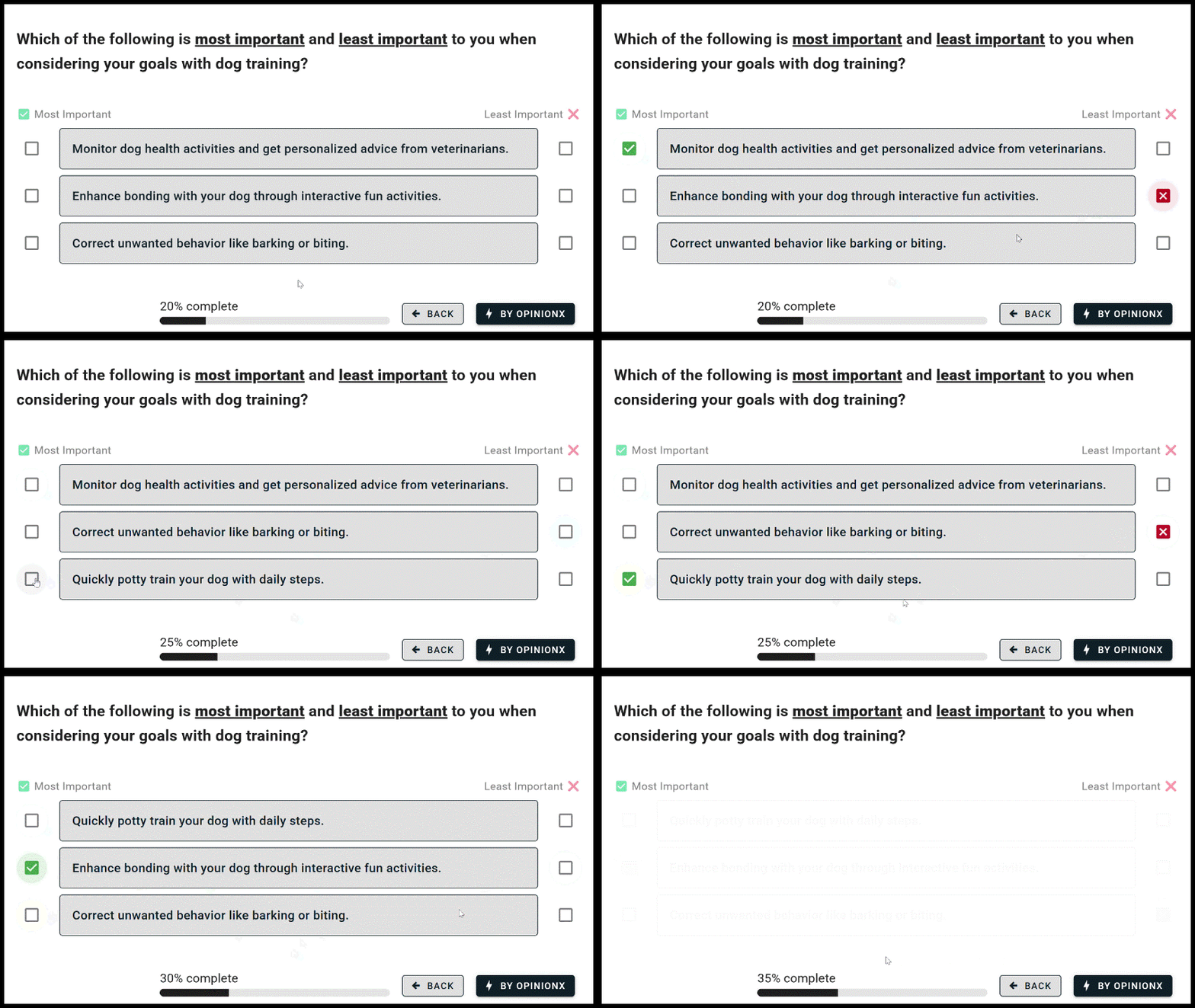
MaxDiff analysis is powerful because it forces users to make trade-offs, revealing what they truly value rather than what they think they should value. When you run MaxDiff across your key segments, you'll get clear rankings of value priorities for each group.
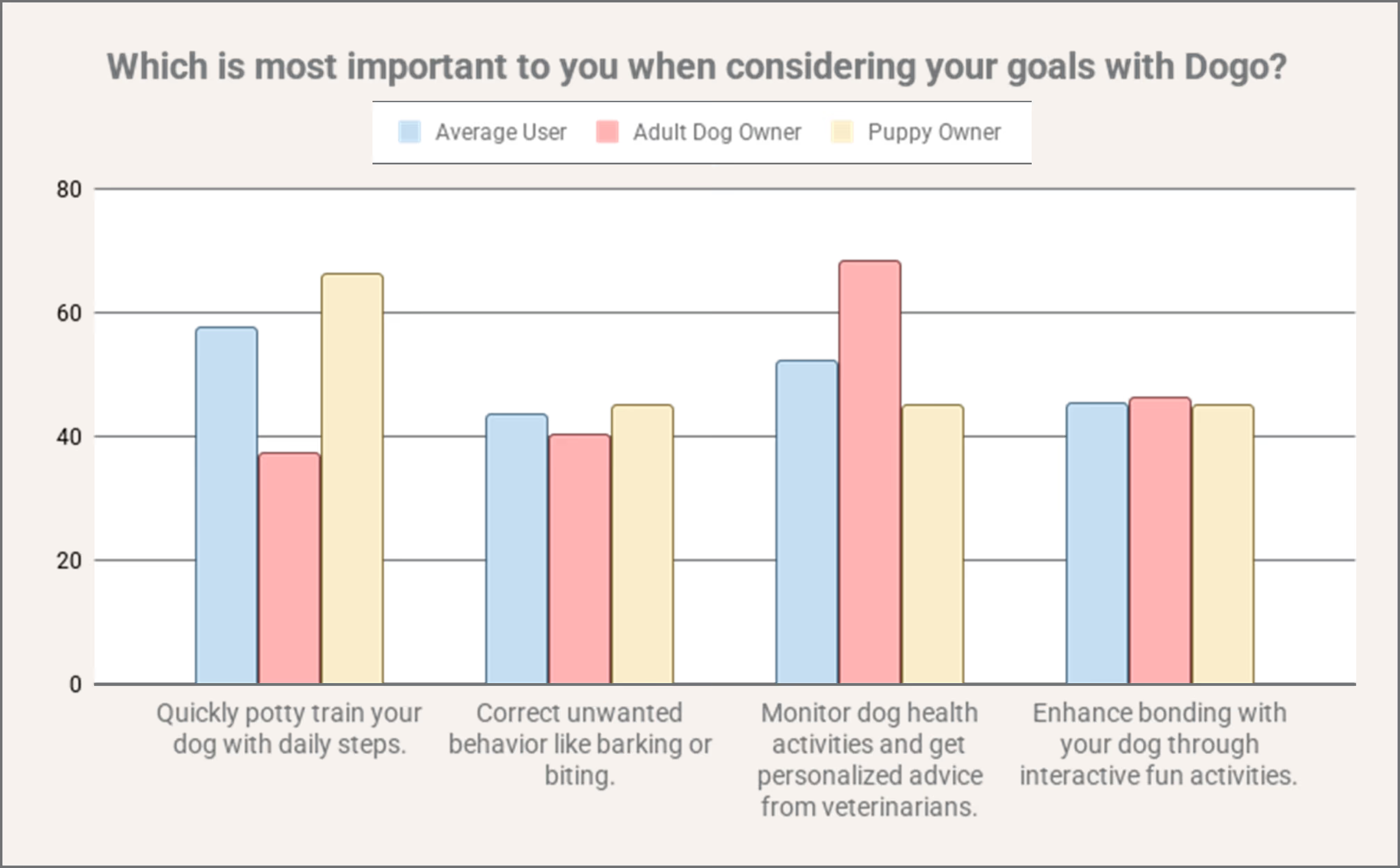
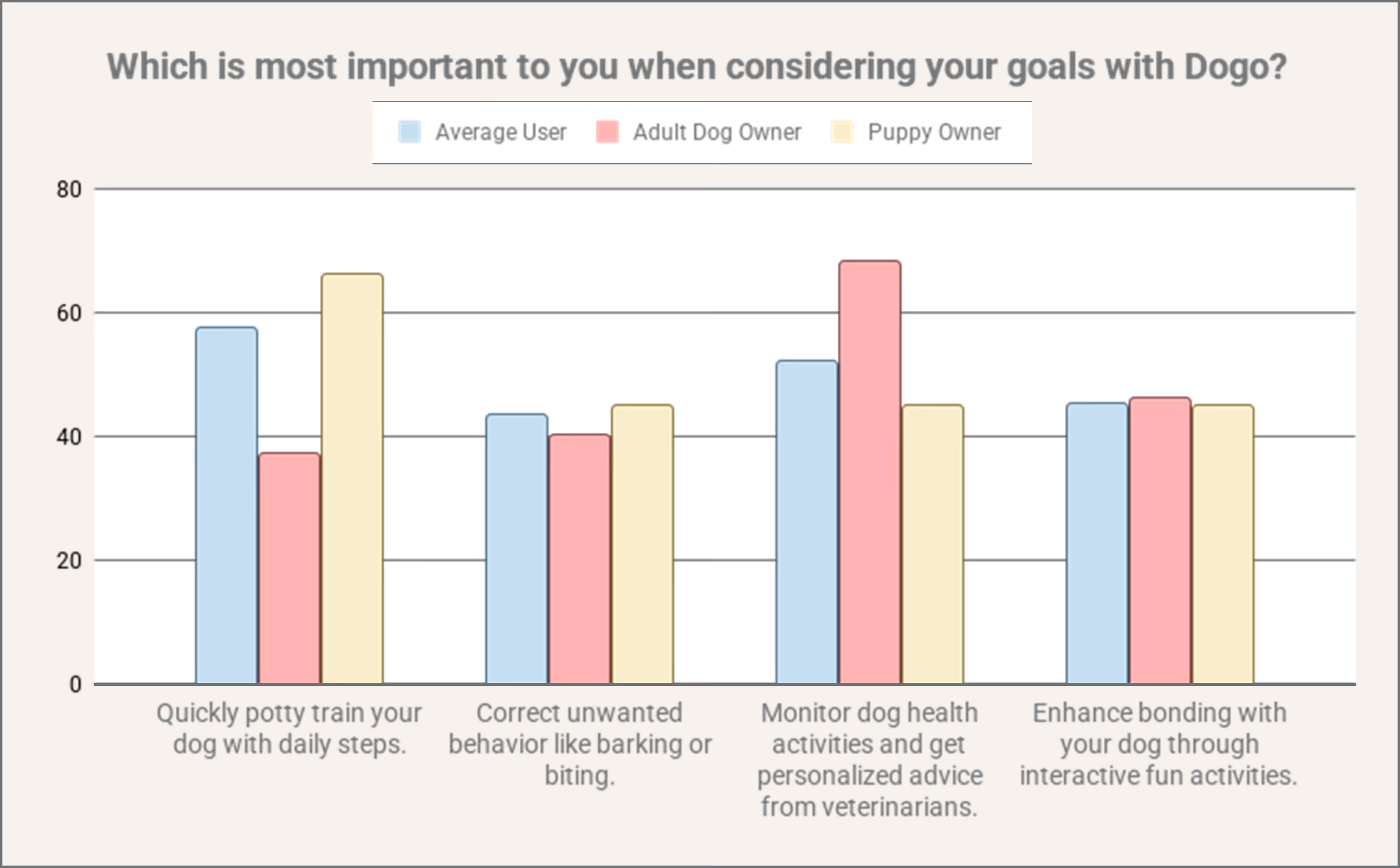
The results can be surprising. You might think security is your top value proposition, but your core user segment might actually care most about ease-of-use or community features.
Case Study: How Dogo Increased ARPU by 13%
Dogo is a dog training app that helps owners teach their dogs obedience and behavior commands. The app has a freemium model with a paid subscription tier.
Their starting point was a generic paywall that tried to highlight all the benefits: video training courses, step-by-step instructions, one-on-one support, a training community, and more. The paywall was cluttered and didn't speak to any user segment in particular.

Dogo conducted MaxDiff analysis with their user base and discovered three distinct segments:
- Results-oriented owners: Cared primarily about whether the training actually worked (success rate, effectiveness)
- Social owners: Cared about community and connection with other dog owners
- Support-seeking owners: Cared about having expert guidance and personalized support
With this insight, Dogo redesigned their paywalls to emphasize different value props for each segment. The paywall for results-oriented users led with their success rate and before/after training videos. For social users, they emphasized the community aspect and user testimonials. For support-seeking users, they highlighted expert trainers and one-on-one support options.


The pricing insight was equally valuable. Dogo discovered that support-seeking users were willing to pay a premium for access to expert trainers, so they could support a higher price point with that segment.
After implementing these segmented paywalls, Dogo saw impressive results:
- +9.5% increase in paywall conversion rate (the overall percentage of users who see the paywall and subscribe)
- +13% increase in ARPU (average revenue per user)
The ARPU lift came from a combination of higher conversion rates and the ability to offer higher price points to segments willing to pay more.
How to Apply This to Your App
Here's a 5-step approach to personalize your paywall messaging:
- Define 2-5 key segments based on user goals, behavior, or acquisition source
- Run MaxDiff analysis or surveys with a representative sample of users from each segment to understand value priorities
- Design variant paywalls that emphasize different value propositions for each segment
- Implement paywall personalization in your app to serve the right variant to each user
- A/B test and iterate on messaging, pricing, and positioning based on conversion data
Start simple. You don't need to have 100 different paywall variants. Even 2-3 well-crafted variants that speak to your core segments can meaningfully improve conversion and ARPU.
Conclusion
Generic paywalls leave revenue on the table because they try to appeal to everyone equally. By identifying your key user segments and personalizing your paywall messaging to match what each segment values, you can significantly improve both conversion rates and average revenue per user.
The investment in understanding your users is well worth the payoff. Start with MaxDiff analysis to uncover value priorities, design segmented paywalls, and measure the impact on your metrics. This systematic approach to paywall personalization is becoming table-stakes for high-growth subscription apps.
Want to implement personalized paywalls in your app? We partner with Applica, a platform that makes it easy to build and test segmented monetization experiences. Reach out to learn more.